2026.09.18
 Industry News
A standard highlighter and a permanent marker solve two different problems, and combining their strengths into one pen means reconciling ink chemistries that were never designed to work together. A permanent highlighter marker needs the bright, fluorescent visibility that makes a highlighted line jump off the page, paired with the fade and smudge resistance that a typical water-based highlighter was never built to provide.
Fluorescent pigment ink achieves its glowing, attention-grabbing color through dye compounds that absorb light at one wavelength and re-emit it at another, a chemical property that produces the visibility highlighters are known for. This same dye chemistry tends to be more light-sensitive and more prone to fading under UV exposure than the pigments used in a standard permanent marker, which creates a real formulation challenge when a manufacturer sets out to build a permanent highlighter marker that keeps its brightness over time rather than losing intensity within weeks of regular use. Lishui Hongdu Stationery Co., Ltd. addresses this by selecting fluorescent dye compounds specifically screened for improved light stability rather than defaulting to whichever pigment reads brightest on a shelf comparison regardless of its fade characteristics.
Solvent based marker ink evaporates quickly after application, leaving the pigment bonded to the surface in a way water-based ink cannot match, which is the property that gives a permanent marker its resistance to smudging and water exposure. Building a permanent highlighter marker around this ink base means suspending a fluorescent dye, typically formulated for a water-based carrier, inside a solvent system instead, a substitution that can affect both color intensity and how evenly the ink lays down on paper. Getting this combination right takes more testing than either component would require on its own, since a solvent carrier that works well with standard permanent marker pigments does not automatically perform the same way once a fluorescent dye replaces the usual colorant.
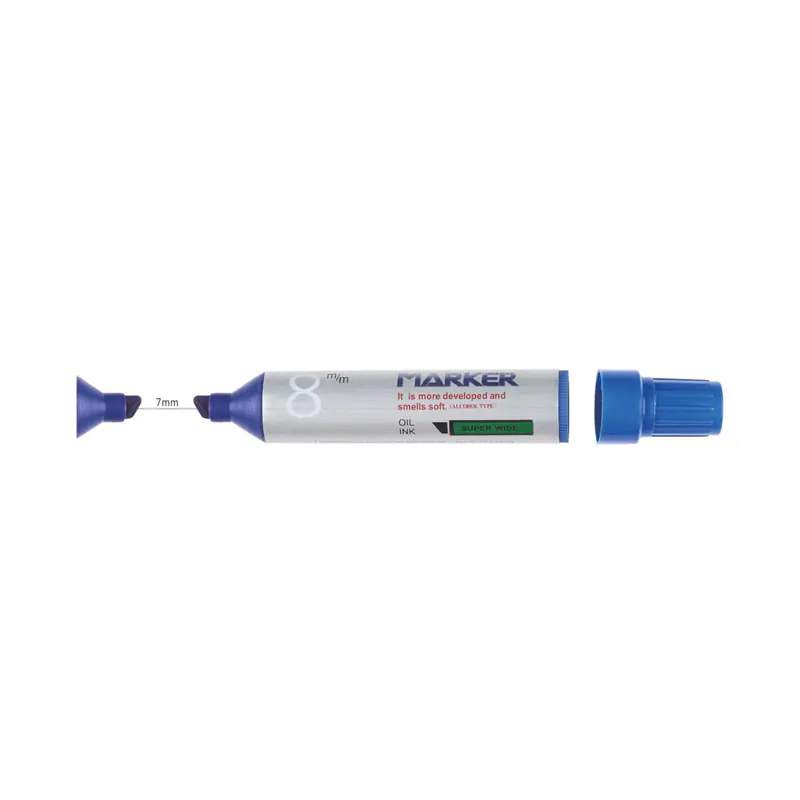
A permanent highlighter marker built on a solvent-based ink system carries the same surface versatility a standard permanent marker offers, working on glass, plastic, and metal in addition to paper, which opens applications beyond the highlighting task the pen was originally associated with. Warehouse labeling, equipment marking, and other industrial uses benefit from this fluorescent visibility paired with permanent adhesion, letting a single pen serve a role that would otherwise require carrying both a standard permanent marker and a separate highlighter. This crossover use case has become a more common request from buyers sourcing markers for industrial and logistics applications rather than office or classroom settings.
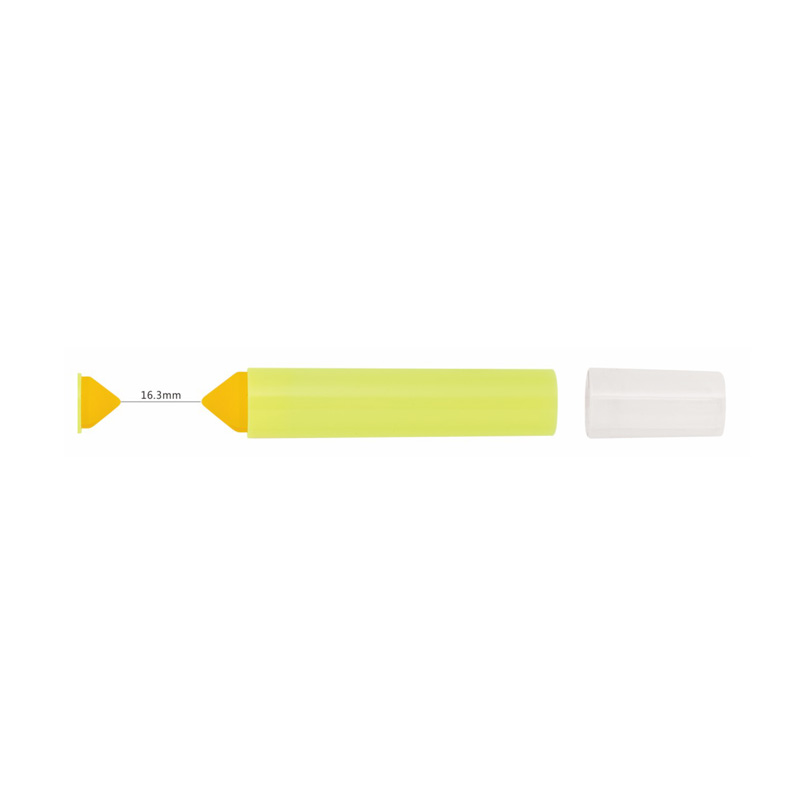
A chisel-tip or bullet-tip nib on a permanent highlighter marker has to distribute the solvent-based fluorescent ink evenly across a stroke without the streaking or uneven saturation that can appear when an ink formulation is still being refined for a new pigment-carrier combination. Nib material and fiber density affect how much ink releases per stroke, and a nib calibrated for standard permanent marker ink may release fluorescent ink unevenly if the viscosity of the reformulated ink differs even slightly from what the nib was originally designed around. Testing nib and ink combinations together during development, rather than treating the nib as a fixed component unrelated to the ink formulation, is part of what keeps color consistency steady across a full production run.
Buyers sourcing a permanent highlighter marker line for export should confirm compliance with relevant safety standards for writing instruments, since a fluorescent, solvent-based ink formulation may require different testing than a standard water-based highlighter even when both pens are marketed under a similar safety framework. Lishui Hongdu Stationery Co., Ltd. maintains compliance with CE, EN71, and ASTM D-4236 standards across its marker lines, and buyers placing bulk orders for a new fluorescent-permanent hybrid product should confirm which specific certifications apply to this particular ink chemistry rather than assuming coverage extends automatically from an existing standard marker line.


Stationery Manufacturer
Information
 +86-577-86553287
 [email protected]
 Room 201, Building 2, District 3, Wanyang Innovation City, Bihu Town, Liandu District, Lishui City, Zhejiang Province
Contact Us



 English
  中文简体
中文简体  Español