2026.11.06
 Industry News
Anything sold as a Glitter Drawing Marker has to solve a problem that ordinary markers never meet: the colour particles can be seen with the naked eye. Pigment in a standard marker is measured in fractions of a micron and stays suspended without effort. Glitter flakes are often hundreds of times wider, so they settle in the barrel, jam in the nib, and leave a patchy line when the ink is not managed. Much of what separates one sparkle marker from another sits in how those three behaviours are handled.
Stokes' law describes how fast a particle sinks in a liquid: the speed rises with the square of its diameter and falls as the liquid gets thicker. A flake ten times wider than another settles roughly a hundred times faster, all else equal. Plastic film and metallic flakes are denser than a water-based or solvent-based carrier, so they sink whenever a marker lies still on a desk or in a pencil case.
Formulators work with two levers. A thickener raises viscosity, so flakes drift down slowly, and a small ball inside the barrel lets the user remix by shaking. The rattle heard when a Glitter Drawing Marker is shaken is that ball at work. Barrel fill level matters as well, because the ball needs headroom to travel, and a barrel filled to the cap cannot mix.
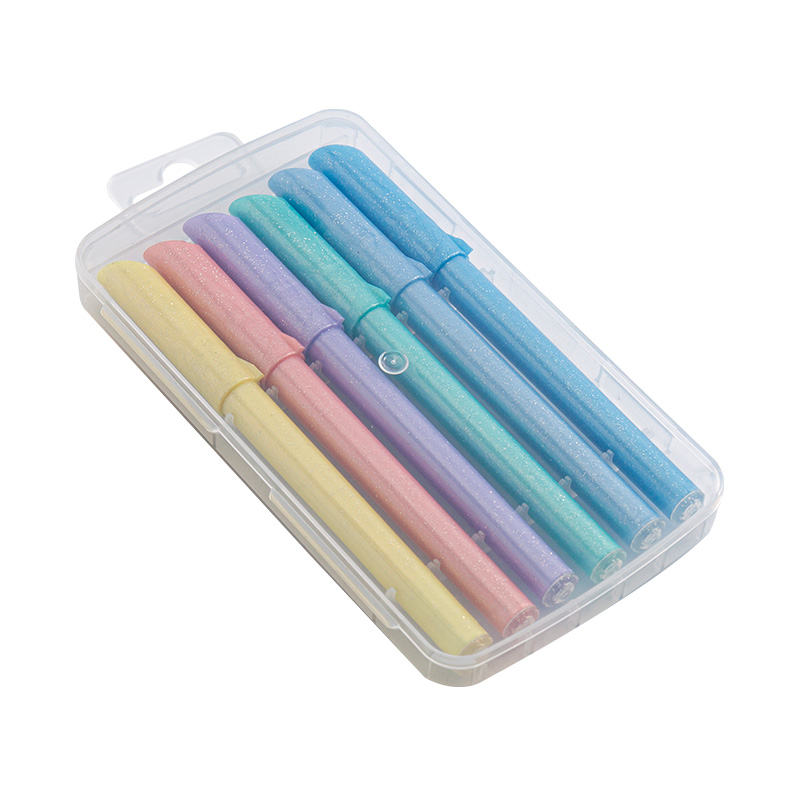
A fibre nib behaves like a bundle of fine channels. Flakes wider than those channels catch at the mouth of the nib and block it, so glitter formulations lean on wide-channel nibs and on valve-action systems, where pressing the tip against paper opens a spring valve and lets ink and flakes flow together. Valve systems need priming, a few presses until ink reaches the tip, which is why a short instruction printed on the barrel earns its space.
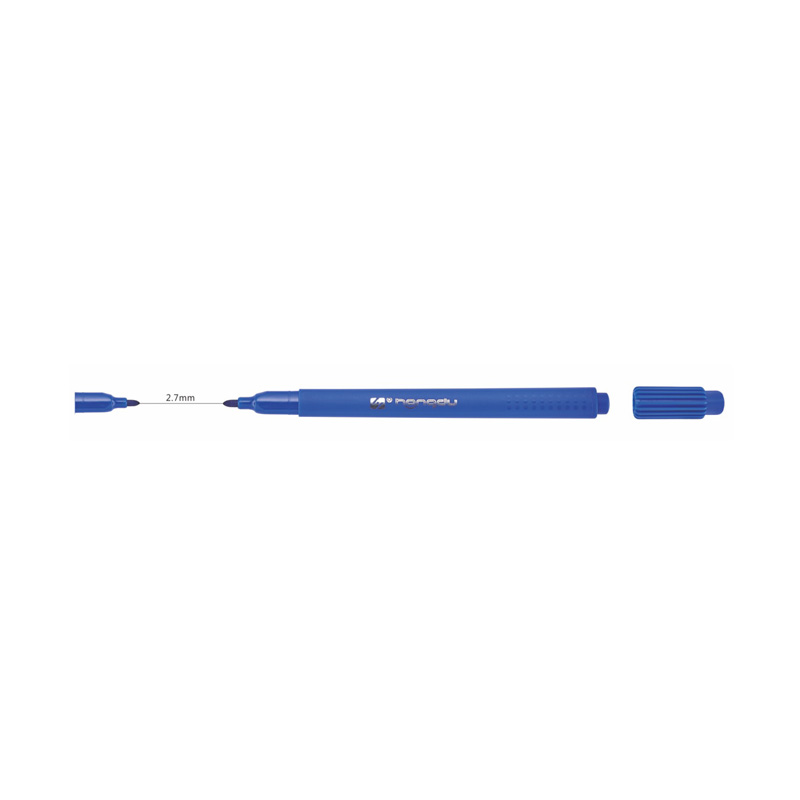
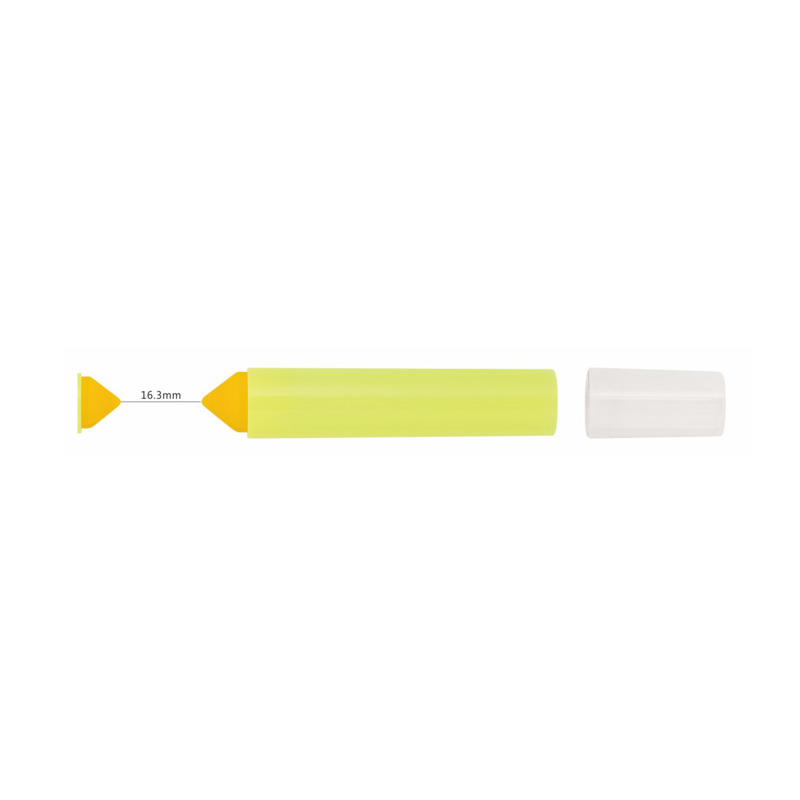
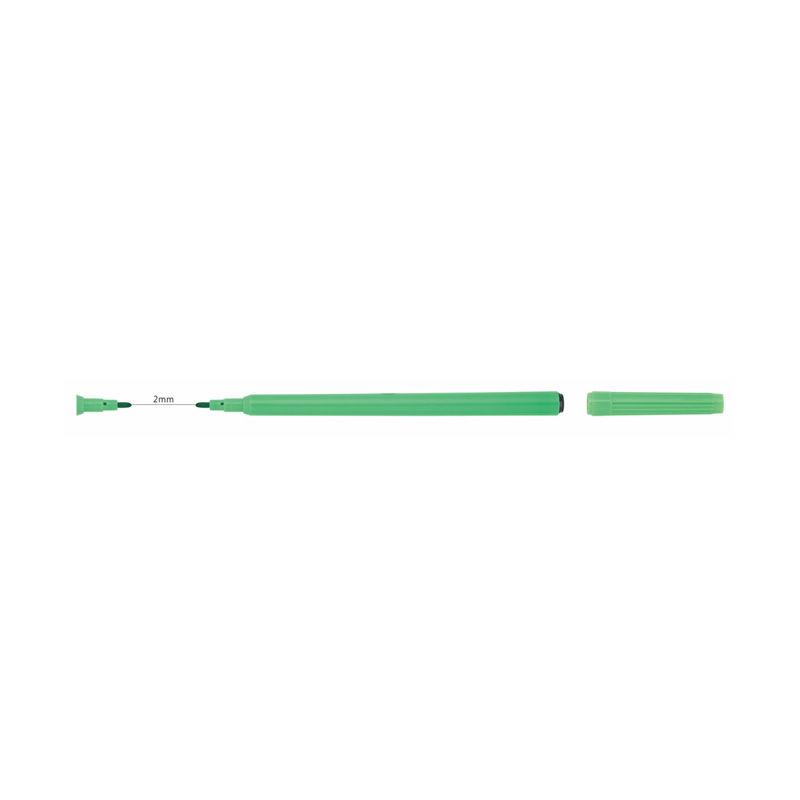
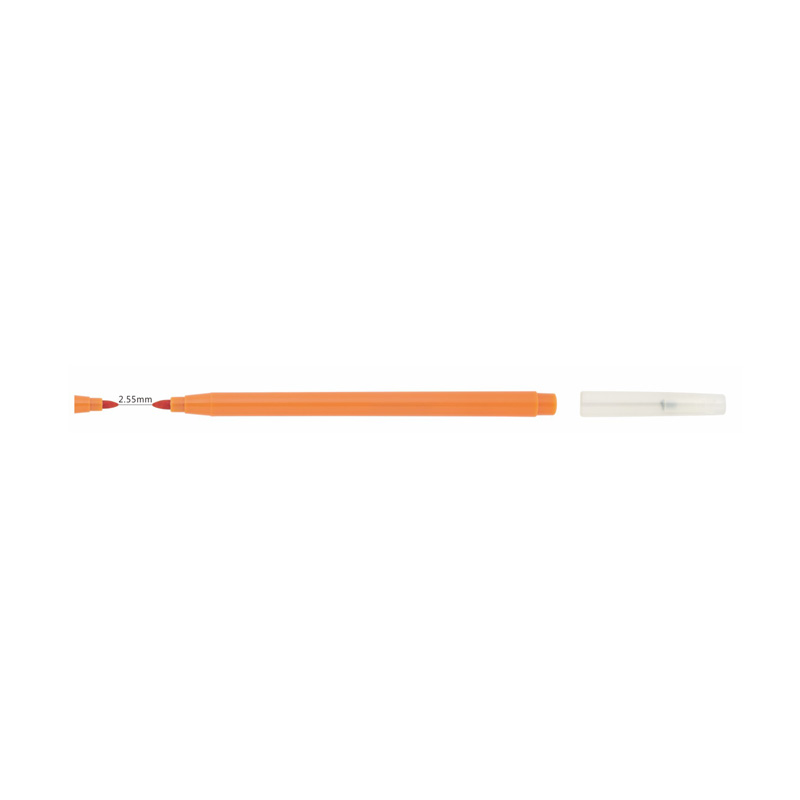
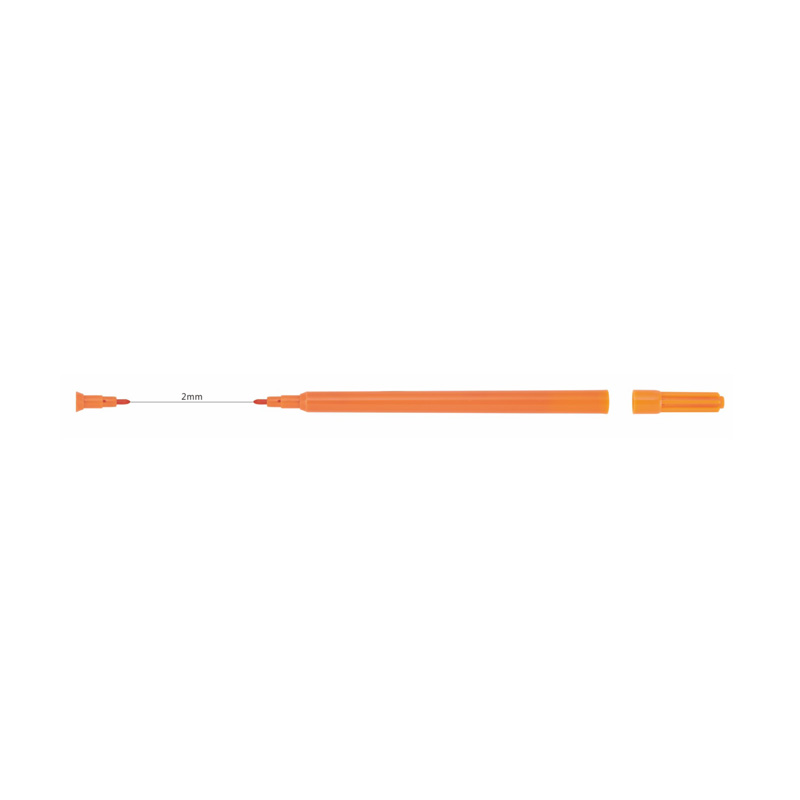
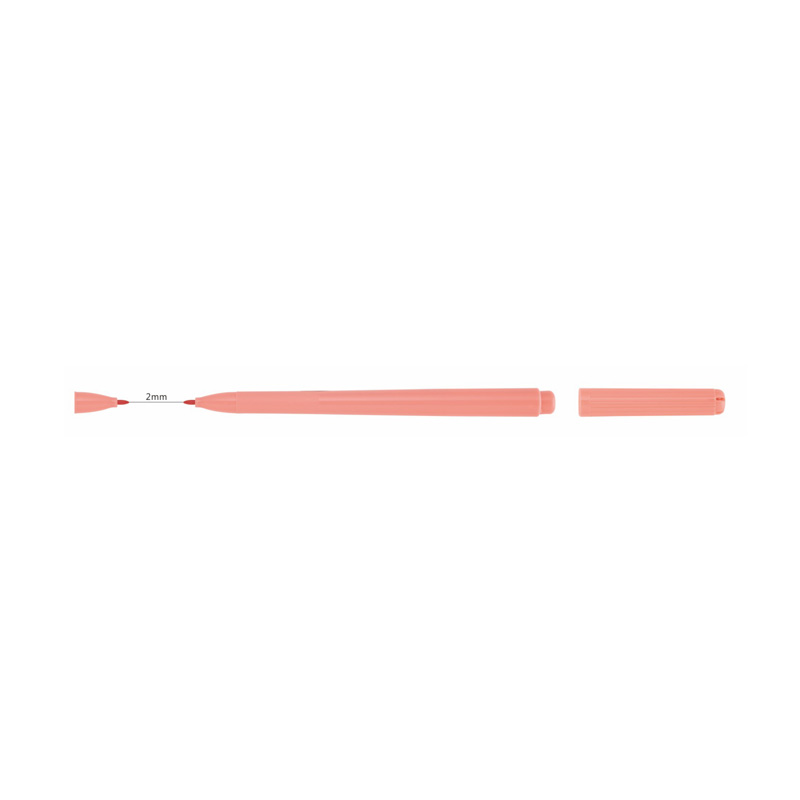
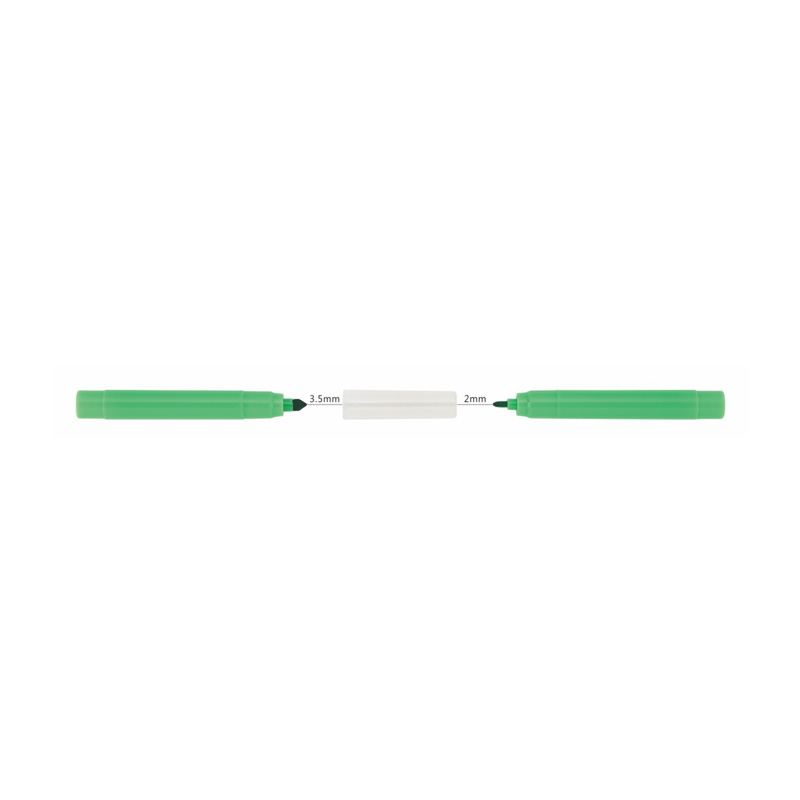
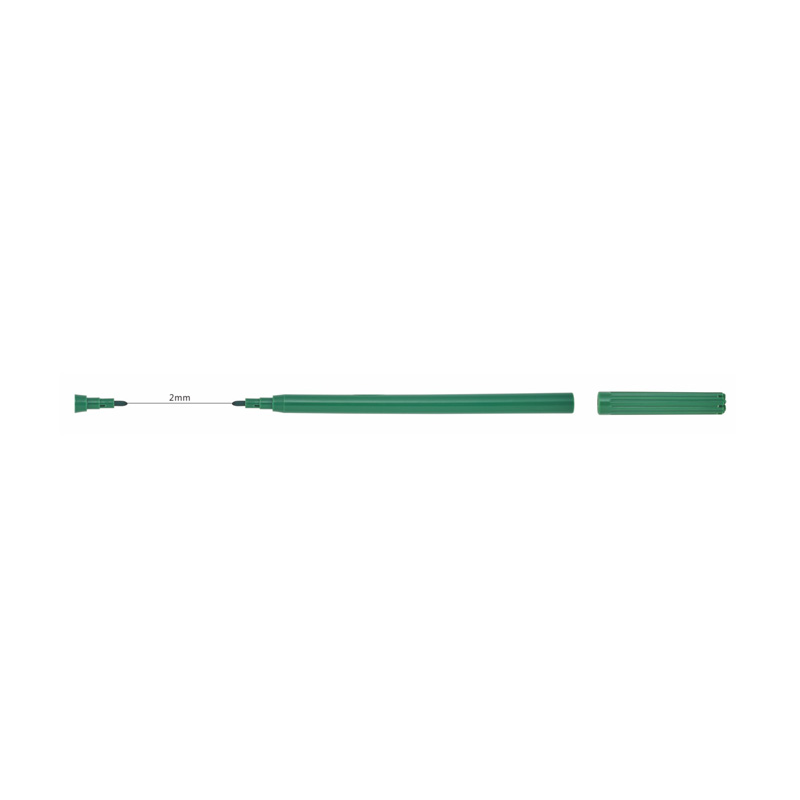
Flake size and tip width are tied together. A Glitter Pen with a fine tip meets the size limit sooner than a broad one, so fine-tip lines call for smaller flakes, while a Glitter Drawing Marker with a broad tip can carry larger flakes that sparkle more at arm's length. Tip shape changes the use as well: a bullet tip suits lettering and outlines, and a chisel tip suits filling larger areas.
Glitter works by reflecting light, and on white paper the background reflects light too, so contrast between line and page is low. Black card and deep-coloured stock give the flakes a dark field to shine against, which is why a Glitter Drawing Marker is a staple for greeting cards, scrapbook pages and lettering on dark sheets. The carrier ink is mostly transparent, so the visible colour of the line comes from the flakes themselves.
Glitter flakes are usually cut from coated polyester film or from metallised film, and the colour comes either from the coating or from a dye layer. In a water-based carrier, this rarely causes trouble. In a solvent carrier, some dyed flakes bleed colour into the ink, and the sparkle turns muddy, which is why flake and carrier are tested together in a Glitter Drawing Marker before the formula is fixed.
Flake shape changes the line too. Hexagon and square cuts catch light at different angles, and mixed sizes give a denser sparkle than a single size. A Glitter Pen line meant for fine detail often uses a single small cut, because uniform flakes pass through a narrow tip more predictably than a blend.
For a Glitter Drawing Marker, water-based inks suit paper and card, and on smooth non-porous surfaces such as glass they wipe off again. Alcohol-based and oil-based carriers grip glass, ceramic, metal and plastic more firmly, dry at different speeds, and suit window and ceramic decoration better than paper work. A single barrel format can therefore serve two programmes, one for stationery and one for smooth-surface decoration, with the ink as the only change to the build.
In production, glitter colour mix, nib shape, barrel print and ink base are adjustable on order, so the same Glitter Drawing Marker body, the same sparkle mix and the same nib can ship with a paper-grade ink for one market and a smooth-surface ink for another. Adhesion depends on the surface rather than on the glitter colour, so a short test mark on the target surface settles the question before a full run is committed.


Stationery Manufacturer
Information
 +86-577-86553287
 [email protected]
 Room 201, Building 2, District 3, Wanyang Innovation City, Bihu Town, Liandu District, Lishui City, Zhejiang Province
Contact Us



 English
 中文简体
 Español