2026.10.27
 Industry News
A Nontoxic Washable Stamp Pen earns its place in a classroom or craft room because accidents are expected there, and a mark on a sleeve or a desk is easier to forgive when it rinses out. Lishui Hongdu Stationery Co., Ltd. in Lishui, Zhejiang, makes the NO.666, a stamp pen with non-toxic ink that is described as removable from fabrics and surfaces without leaving a trace. How that happens depends on the ink chemistry, the fabric, and the way the mark was made.
Ink that washes out has to dissolve in water again after it dries. In a water-soluble ink, the colorant is a dye that stays dissolved in the liquid instead of a solid particle suspended in it. When a damp cloth or a tap of water reaches the dried mark, the dye loosens from the surface and flows away with the water. Pigment-based inks behave differently, because their solid particles lodge between fibers and resist rinsing. A washable stamp pen generally relies on a dye-based water-soluble ink, and a Nontoxic Washable Stamp Pen earns its washable label from that choice. The exact ink composition of the NO.666 can be confirmed with the factory before ordering.

The same drop of ink leaves a different stain on different cloth. Cotton absorbs liquid into its fibers, so ink spreads and soaks deep, yet a water-soluble ink inside cotton still releases well in a wash because water reaches it easily. Polyester and other synthetic fibers repel water, so ink sits on the surface and can be wiped or rinsed off quickly. A Nontoxic Washable Stamp Pen mark hides easily on dark, heavily dyed cloth, while pale cloth shows every trace. A Nontoxic Washable Stamp Pen used around school uniforms, craft aprons, and tablecloths meets all of these fabrics in the same week.
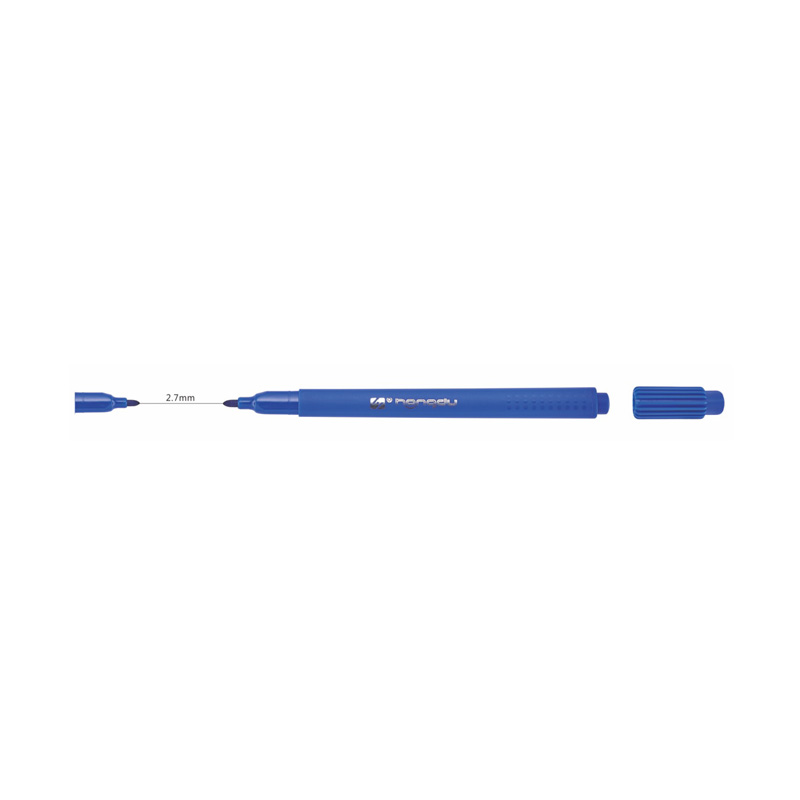
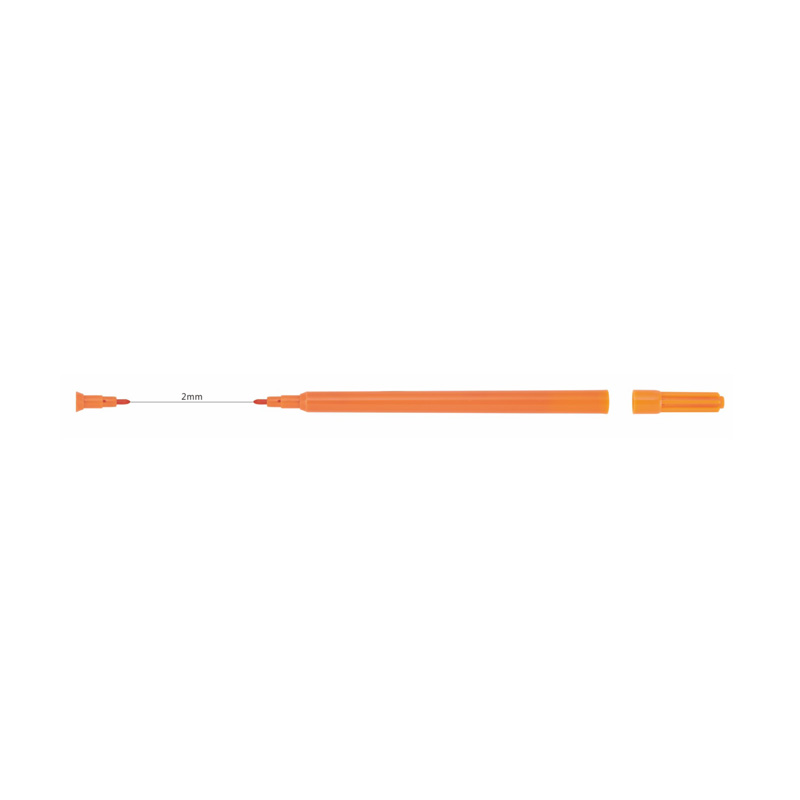
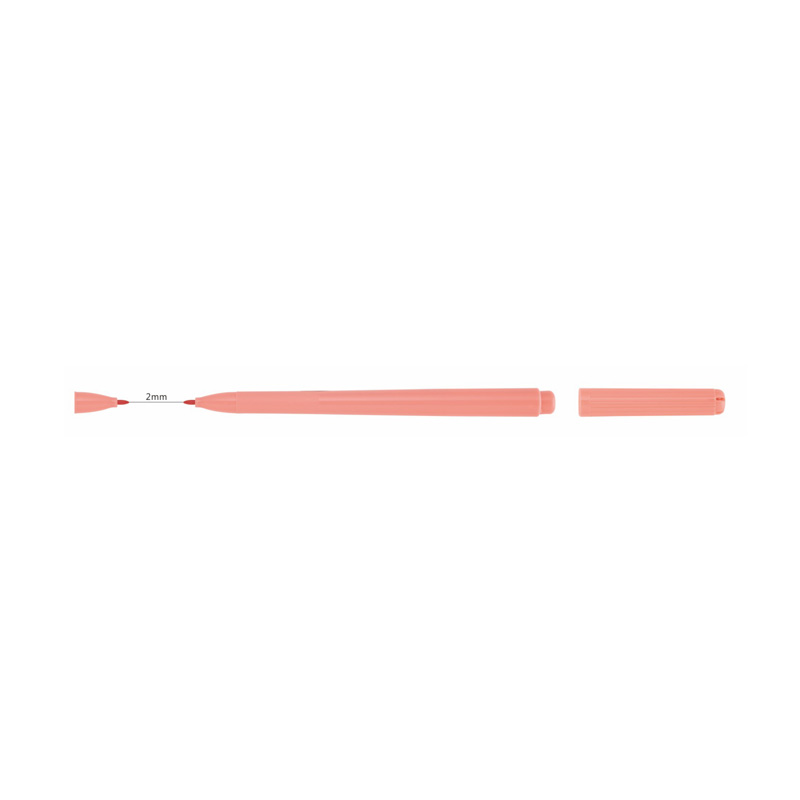
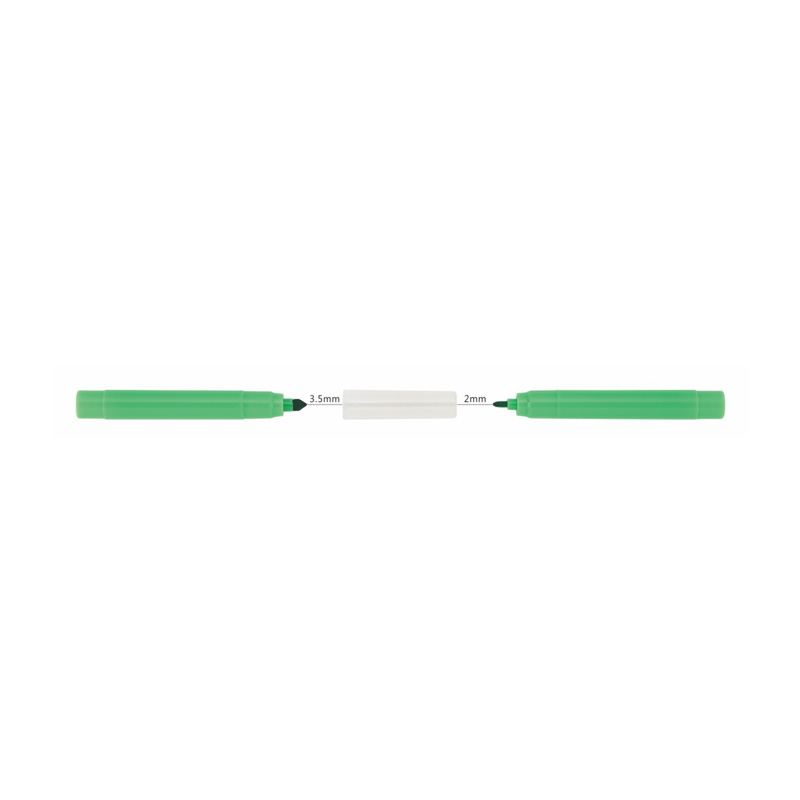
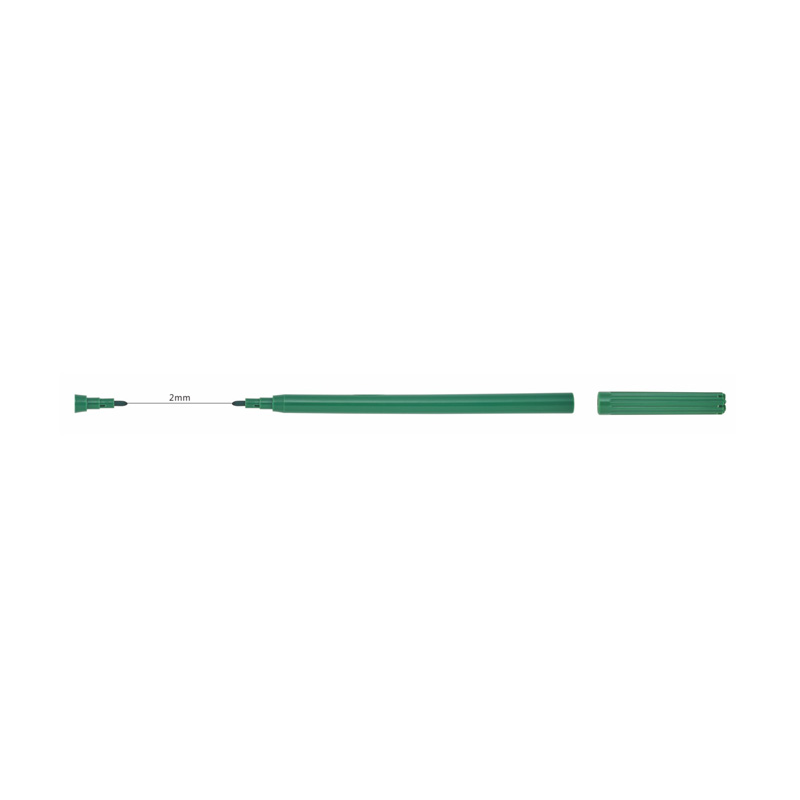
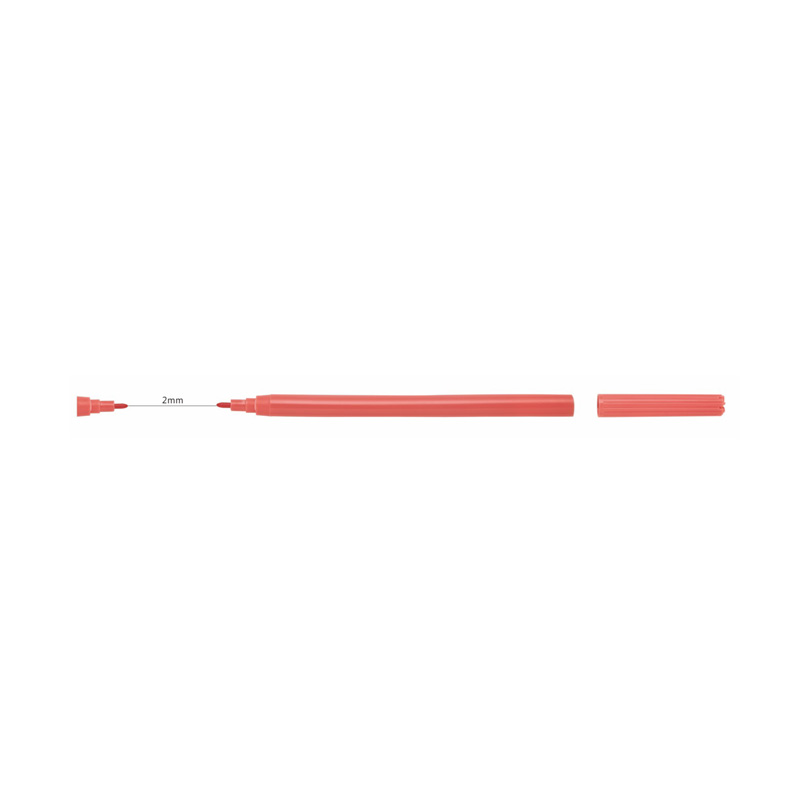
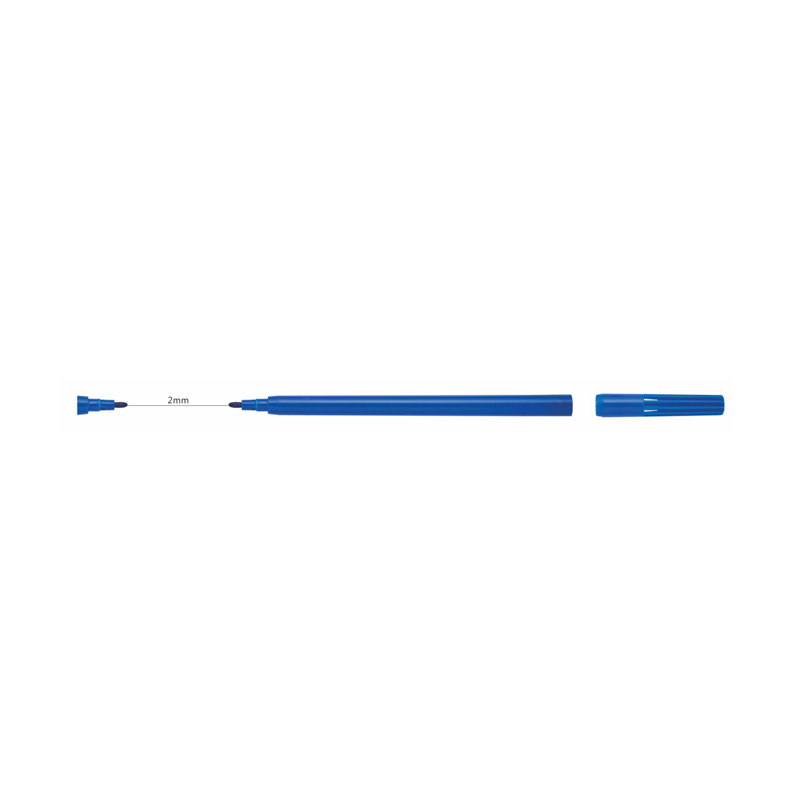
A stamp presses a thin film of ink onto a surface and lifts away. A pen tip drags ink along a line and presses it into the material. A stamped impression sits mostly on top of the fibers, while a heavily drawn line soaks in, so the stamped mark usually releases more readily. The NO.666 carries a stamp at one end and a pen tip for writing and drawing at the other, so a Nontoxic Washable Stamp Pen can leave different traces on the same fabric depending on which end touched it. Wash-out results on specific fabrics are not stated here and can be confirmed with the factory before ordering.
Fresh ink rinses out easily, and ink that has dried for days takes longer. Water-soluble dyes can also bond more firmly to some fibers over time, especially after warm drying. Rinsing in cool water before any heat reaches the garment keeps the stain from settling, and a second rinse removes the faint shadow that sometimes remains. Washable ink is forgiving, not unlimited, so a Nontoxic Washable Stamp Pen mark that has been through a hot dryer may need more than one wash.
Children get ink on hands as often as on clothes, and a Nontoxic Washable Stamp Pen that rinses from skin as well as sleeves saves a second round of cleanup. The NO.666 uses ink that is described as gentle on skin and suitable for children's use, and a washable ink lifts from skin with ordinary soap and water. Smooth desks, plastic tables, and laminated boards release water-soluble ink under a damp wipe. Porous wood and unsealed paper hold ink longer, so the finish of a surface decides how much effort the cleanup takes.
An ink formulated for easy removal has to give up a little. Dyes that dissolve readily in water also run if a drawing gets wet, so a stamped picture on paper can blur under a damp hand. Strongly saturated colors can leave a faint tint in fabric even after washing. A Nontoxic Washable Stamp Pen balances these demands by choosing dyes that release cleanly while still printing a clear mark, and the color range of the NO.666 can be confirmed with the factory before ordering.
The NO.666 is described as useful for cleaning up accidental marks on fabrics and surfaces, a point that matters to parents and teachers who supervise young users. A small amount of water and a cloth is the usual start for a Nontoxic Washable Stamp Pen mark, with a full wash for fabric. Where a mark does not fully release from a pale or heavily textured fabric, a repeat of the same steps normally works.


Stationery Manufacturer
Information
 +86-577-86553287
 [email protected]
 Room 201, Building 2, District 3, Wanyang Innovation City, Bihu Town, Liandu District, Lishui City, Zhejiang Province
Contact Us



 English
 中文简体
 Español