2026.06.26
 Industry News
Mention xylene based permanent markers to someone in a manufacturing plant, fabrication shop, or maintenance department, and the conversation is often very different from what you would hear in an office supply store.
Most people think of permanent markers as simple writing tools.
Industrial users tend to think about surfaces.
Can the mark remain visible on metal? Will it stay readable after exposure to moisture? What happens when the surface contains oil residue, dust, or production-related contamination?
These questions explain why xylene based permanent markers continue to appear in certain professional environments despite the availability of many alternative marker technologies. Xylene-based formulas have historically been valued for their ability to create durable markings on difficult surfaces and in demanding conditions.
The Real Challenge Is Often The Surface, Not The Writing
In many industrial settings, writing on clean paper is the easy part.
Workers may need to identify steel components, machinery parts, pipes, storage containers, or production materials. Some surfaces are smooth. Others are rough, oily, or exposed to outdoor conditions.
A marker that performs well on cardboard may behave very differently on metal or plastic.
This is one reason xylene based permanent markers developed a reputation in industrial applications. Solvent-based formulations have traditionally been used where marks need to adhere to non-porous materials and remain visible under demanding conditions.
Maintenance Teams Often Notice Durability
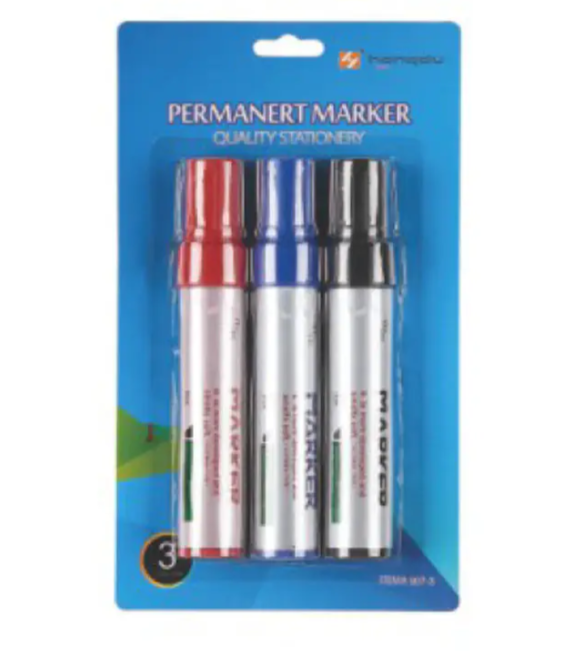
Walk through a workshop and you'll often see markings that were made weeks or months earlier.
Part numbers, inspection notes, installation dates, and temporary production information frequently remain visible long after they were first written.
Interestingly, maintenance personnel rarely judge a marker based on the first few seconds after writing.
Instead, they notice what happens later.
Does the mark fade? Does it smear during handling? Is it still readable after equipment has been moved or cleaned?
These long-term observations often matter more than the initial writing experience.
Oily Surfaces Create A Different Problem
One detail that rarely appears in consumer discussions is how common oil contamination can be in industrial environments.
Machined components, maintenance equipment, and fabrication materials are not always perfectly clean when marking occurs.
Historically, some xylene based permanent markers have been used in situations where markings need to remain visible on surfaces that may contain oil or moisture. Certain industrial formulations are specifically promoted for marking through water or oil films.
For workers, this is often a practical issue rather than a technical one.
The component needs identification, regardless of whether it has just come off a production line.
Why The Smell Is Often Mentioned
Ask experienced industrial workers about xylene based permanent markers, and many immediately mention the odor.
That reaction is not surprising.
Xylene-based solvents have a distinct smell that has become closely associated with older industrial marker formulations. In fact, many modern manufacturers specifically advertise xylene-free alternatives partly because of health and odor considerations.
Over time, many industries have shifted toward alternative solvent systems, but certain specialty applications still rely on xylene-based products where specific marking characteristics are required.
The Marker Often Reflects The Job Environment
One interesting thing about xylene based permanent markers is that they are often discussed less in art studios and more in workshops, warehouses, and production facilities.
The reason is simple.
The environments themselves create the demand.
When surfaces are exposed to weather, handling, moisture, or industrial processes, marking requirements change. What works perfectly on office paper may not work as effectively on fabricated steel, equipment housings, or outdoor materials.
That is why marker selection in industrial settings is often driven by the surface and the working environment rather than by color choices or writing comfort.
A Marker Can Tell You A Lot About The Workplace
The presence of xylene based permanent markers in a facility often reveals something about the tasks being performed there.
They tend to appear where durability, surface compatibility, and long-term visibility matter more than appearance alone.
For many workers, the marker is simply another tool.
Yet behind that simple tool is a practical question that every industrial operation faces: how do you make information stay visible when the environment is trying to erase it?


Stationery Manufacturer
Information
 +86-577-86553287
 [email protected]
 Room 201, Building 2, District 3, Wanyang Innovation City, Bihu Town, Liandu District, Lishui City, Zhejiang Province
Contact Us



 English
  中文简体
中文简体  Español